A quiet boom in the Spanish real estate market: You buy a house, and in gratis you get.... a tenant, a pensioner or a "ransom"!
It is said that great cures are needed for great ills. In sunny Spain, where the dream of having one's own "M" for many has turned into a veritable nightmare of unaffordability, the real estate market is currently undergoing a fascinating, if somewhat shocking, mutation. We are in the midst of a massive housing crisis, fueled by a drastic and downright brutal imbalance between galloping demand and shrinking supply. The result? Spaniards have thrown themselves into solutions that would have been considered financial extremes just a decade ago.
We are currently witnessing a "silent boom" in transactions in which the buyer acquires not only the walls, but also... the people inside. We're talking about the rapidly growing popularity of alternative forms of buy-sell: taking over apartments with legitimate tenants, acquiring so-called "bare property" (nuda propiedad) with seniors living there for life, and even - most controversially - buying units occupied by illegal and often violent wild tenants, Spain's notorious okupas.
Although these specific modalities have always existed in the market, today they are experiencing their golden age. Their renaissance is a direct response to drastic changes in the law and unforgiving demographic factors. On the one hand, the government's extension of the minimum lease term to five years has made landlords trapped in long contracts more willing to dispose of their assets. On the other hand, a population that is aging at an alarming rate sees the sale of their lifetime homes as the only chance for a dignified autumn of life.
This phenomenon can be seen most acutely on the east coast. As Valencian real estate agencies are sounding the alarm and rubbing their hands at the same time, the number of such unusual transactions has skyrocketed by a staggering 25%. Why do people decide to make such seemingly risky moves? The answer is simple and brutal: money. Alternative purchases offer much lower entry prices, which for many desperate families is the only ticket to their own piece of the floor, given the astronomical prices in Spain's major metropolises. For sellers, in turn, it's a guarantee of instant cash, and for investors, it's the promise of a steady profit.
"Nuda Propiedad": A golden lifeline for seniors or a macabre investment?
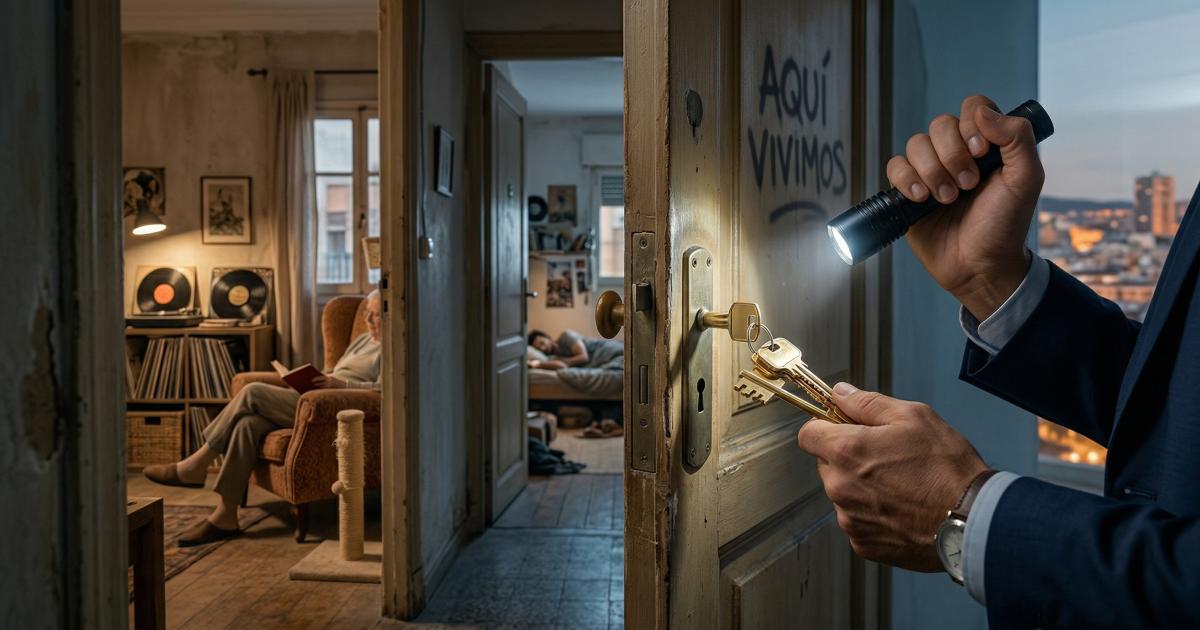
One of the most intriguing yet emotionally charged formats is the phenomenon of nuda propiedad, or "bare property" sales. The mechanism is as ingenious in its simplicity as it is controversial to outsiders: an elderly person sells his house to an investor, collects the cash, but retains the full right (known as usufructo) to live in and use the property until his last breath. The buyer becomes the legal owner of the walls, but cannot even cross the threshold of his new acquisition until the seller dies.
In 2024, it was the Region of Valencia that advanced to the position of absolute leader of this specific market in Spain, registering 389 such operations. Data from the Association of Real Estate Agencies of the Valencia Region (Asicval) makes it clear: this trend is growing stronger every month. It is a response to the dramatic need of elderly owners whose pensions are not enough to cover the rising cost of living. Selling bare property allows them to keep a roof over their heads, their own bed and memories, while enjoying an unexpected cash injection for medicine, travel or medical assistance.
The transaction price in this case is the result of pure, unforgiving mathematics and... biology. It depends directly on the age of the current tenant: the older the usufructuary, the smaller the discount from the market price. Usually, however, buyers can expect gigantic discounts of 20% to 30% below the market value of the premises.
Who buys such houses? The profile is diverse. They range from aggressive investors who are building portfolios for the future to ordinary citizens - including Spanish expatriates - who are planning in advance to return to their homeland, securing a cheap home for retirement.
"This phenomenon is driven primarily by demographics," explains Nora García, president of Asicval. "People are living much longer, and the prospect of moving to a nursing home scares many of them. However, they need urgent help to regain liquidity, pay their bills and be able to function with dignity in their familiar, safe environment. "*
With tenant bundling: money that works from day one
Another format that is experiencing gigantic growth is the sale of apartments with tenants already present. This is an option that, in an era of galloping inflation and economic uncertainty, tempts investors like a siren song. While buying "with a tenant" is nothing new, 2019 has seen an exponential increase in such offers. The culprit here is the legal revolution, which forcibly extended the minimum term of leases from three to five years.
Nora García doesn't beat around the bush: "This drastic increase in the duration of contracts means that absolutely everything can change in an owner's life for five years. Suddenly he may need cash because of a divorce, job loss or other investment. He can't kick out the tenant, so he decides to sell the property with him, often agreeing to a significant reduction in price."
For buyers, it's a win-win situation. They acquire an apartment cheaply and collect rent from day one. Who decides to make such purchases? First of all, investors who value holy peace of mind. Instead of having to deal with renovations, searching for a suitable tenant and the risk of vacancy, they enter a ready-made business with cash flow generated.
This situation is clearly summarized by Vicente Díez, vice president and spokesman for the Official College of Estate Agents (COAPI): "The tenant stays in the apartment and his contract remains intact, as the buyer steps into the shoes of the previous owner through subrogation. This ensures absolute continuity of the lease and minimizes financial risk. On the one hand, we have desperate landlords in need of liquidity 'yesterday,' and on the other, investors who enjoy ready profits without lifting a finger to look for a tenant. "
Ransomware on target: Extreme investment sport
If buying an apartment with an old man or ordinary tenant is a safe gamble, buying houses with illegal tenants (ransomas) is already a financial extreme sport, often verging on criminal structures. Many myths have grown up around this Spanish phenomenon, but for coldly calculating investors it's just another opportunity for massive profit.
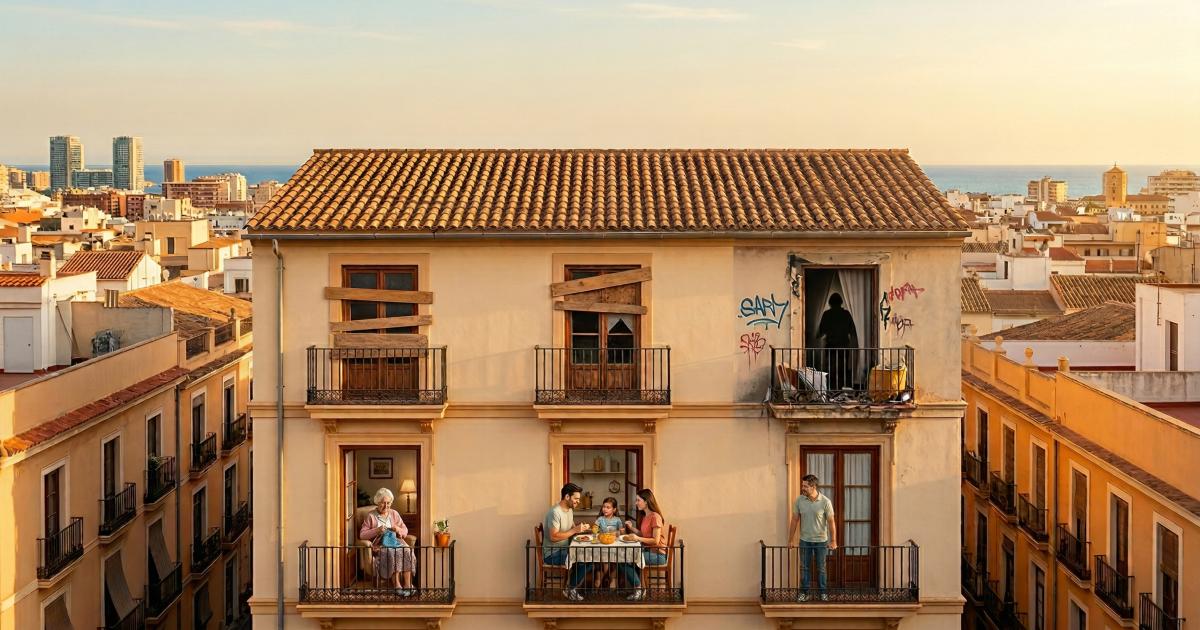
As Valencian agencies report, this murky market falls into two main categories. The first is the so-called "poverty occupation," or mafia occupation. Criminal groups break into empty apartments - very often owned by bankrupt developers or powerful banking entities - and then rent them out to unsuspecting (or aware) individuals. Investors buy such properties for a fraction of their value, and then begin painstaking, behind-the-scenes negotiations. These often involve handing wild tenants a sizable sum of money in exchange for voluntarily vacating the premises.
The second category is made up of former owners or debtors who have gone bankrupt, lost their homes in foreclosure to a fund or bank, but simply refuse to move out. They are stuck in their former homes like besieged fortresses. Experts warn: "This environment is full of people acting out of deep desperation, but also ruthless mobs making a profitable business out of the occupation. The key to success in these deals is a steel mentality, ruthless calculation and perfect negotiating skills ". An investor buys a problem, hoping to solve it cheaply and then sell the property on the open market at a gigantic premium.
New market normalcy
What was once a fringe of the industry is now coming out of the shadows onto the main pages of classifieds portals. Idealista - the absolute giant of Spain's online real estate market - has long smelled blood. The portal has introduced special filters and tabs, allowing it to deliberately search only for properties with tenants, bare ownership or wild tenants.
Comparison of alternative investment models:
| Transaction type | Seller's main motivation | Buyer's risk level | Buyer's profile |
|---|---|---|---|
| Nuda Propiedad | Quick cash injection without losing home, medical expenses, small pension. | Medium (Depends on the life expectancy of the usufructuary, locked up capital). | Long-term investors, expats planning to return, funds. |
| With Inclusion (Tenant) | Urgent need for liquidity before the end of the 5-year lease. | Low (Guaranteed, legal cash flow from day one). | Investors looking for steady passive income and peace of mind |
| From Ransom | Willingness to dispose of toxic asset, recover any part of capital. | Very High (Risk of damage, legal disputes, need to negotiate). | Aggressive investors, flippers, specialists in difficult assets. |
Industry experts are under no illusions. This silent boom is not a temporary anomaly, but hard evidence of how flexible and ruthless at the same time the capital market can be. With powerful pressures on housing and rapidly changing social needs, these "alternative" formulas will stay with us for years to come. The traditional model of buying an empty apartment is slowly becoming a luxury good in Spain, while the rest of society has to find its way in the new, not always comfortable reality of trading in houses with human "inserts."