Flamenco: The Passion, Culture and Emotions of Spain
Flamenco is not just a dance, it is an entire culture that expresses the passion, emotion and traditions of Spain. Originating in Andalusia, flamenco combines music, dance and singing to create a unique artistic experience that fascinates people around the world.
History of flamenco
Flamenco has its roots in the 18th century, when various cultural influences, including Roma, Andalusian, Jewish and Moorish, began to mix in Andalusia. Initially, flamenco was a form of folk music, performed in homes and at local festivals. Over time, it became a more complex art form, and its popularity began to grow, especially in the 19th century, when flamenco began to gain recognition on theatrical stages.
Flamenco elements
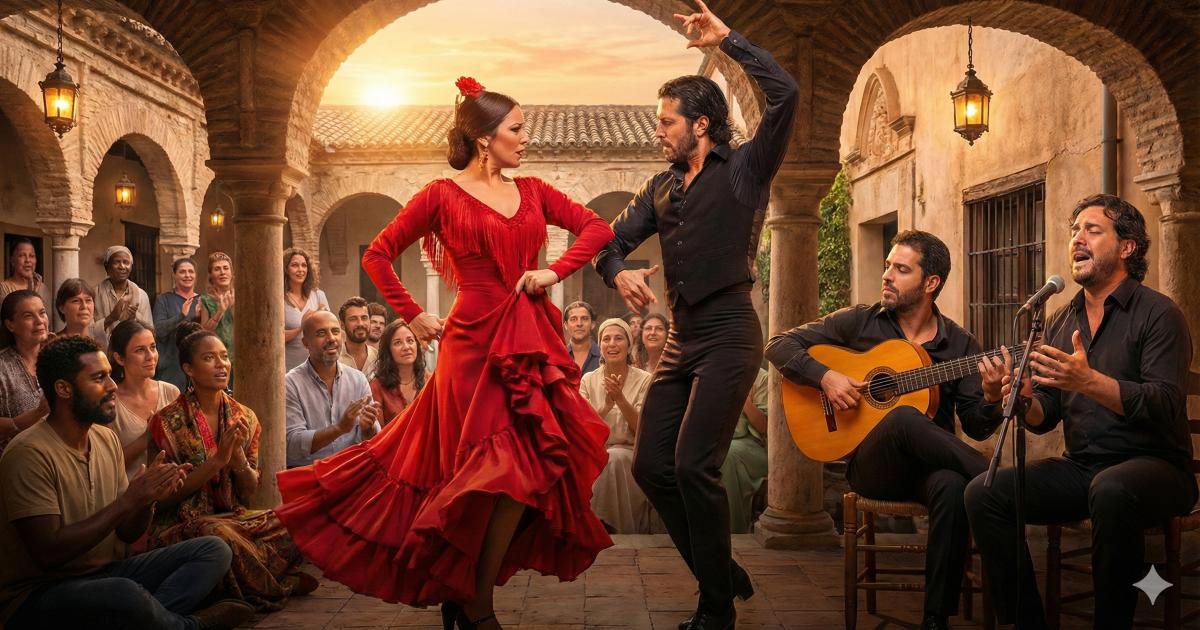
Flamenco consists of three basic elements: singing (cante), dancing (baile) and playing the guitar (toque).
Singing (cante): This is the heart of flamenco, which expresses deep emotions, often related to life, love and suffering. The lyrics are often poetic and personal, and the performers are able to transport listeners into the world of their feelings.
Dance (baile): Flamenco is also a sensual dance that requires not only technique, but also a deep sense of rhythm and expression of emotion. Dancers, both male and female, use not only their legs, but also their arms and body to tell a story. The movements are dynamic and expressive, and the distinctive noises (zapateado) that accompany the dance make the performance even more intense.
Playing the guitar (toque): The flamenco guitar is a key instrument that sets the tone for the entire performance. Guitarists use special techniques such as arpeggios, staccato and percussive strumming to create rich, melodic sounds that harmonize with the dancing and singing.
Contemporary flamenco
Flamenco has undergone many changes in recent years, combining tradition with modernity. Today you can find a variety of interpretations of flamenco, from classical to more contemporary, which introduce new styles and elements, such as jazz or hip-hop. Many young artists are exploring new directions, keeping flamenco alive and dynamic.
Flamenco around the world
Flamenco is not limited to Spain. Thanks to its popularity, the art has gained worldwide recognition. Flamenco festivals are held in various countries, and many artists perform on international stages. In cities such as New York, Tokyo and London you can find flamenco dance schools that attract enthusiasts from all over the world.
Whether you are an experienced flamenco lover or just beginning your adventure with this art, you are sure to feel its extraordinary power and charm. Flamenco is not just dance - it is a true emotional journey that can touch the deepest strings in the heart of anyone who has the opportunity to see it.