Spanish Time—or Why Life Starts Later
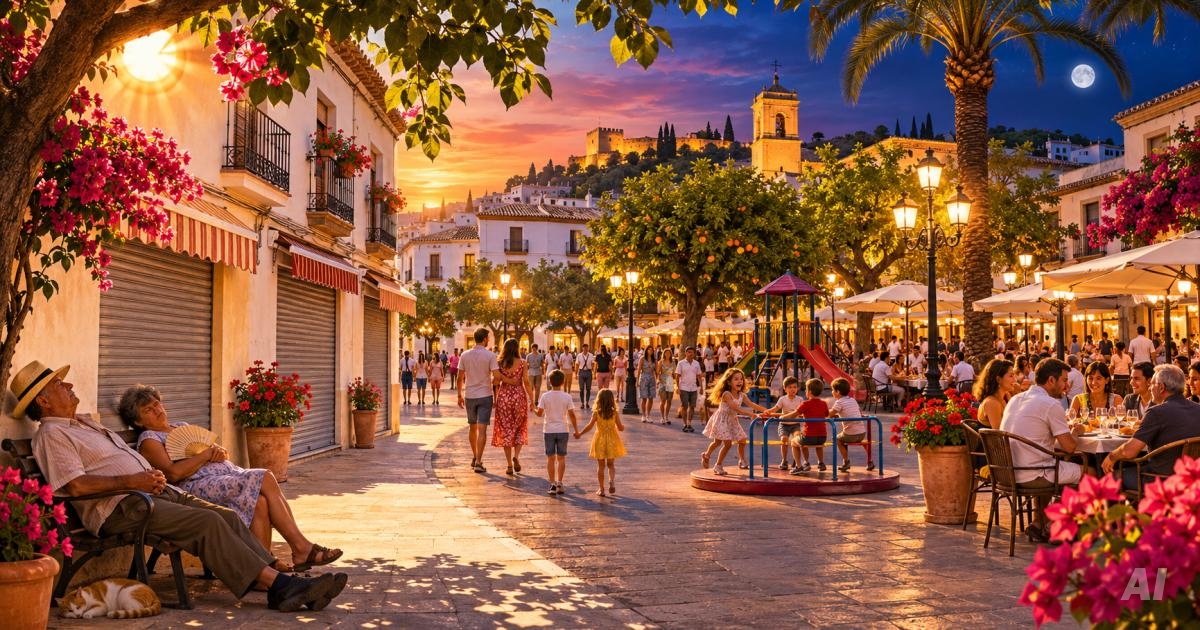
Anyone visiting Spain for the first time quickly notices that time moves differently here. Lunch isn’t served until after 2:00 p.m., dinner starts after 9:00 p.m., and children play in the squares until midnight. For tourists from Poland or Germany, this is often a culture shock—but for Spaniards, it’s the natural rhythm of life.
Where did this come from?
Some researchers point to General Franco’s decision in 1940, when the time was shifted by one hour to align with Germany. But an even more important factor turned out to be… the climate.
In the summer, the heat brings life to a standstill around midday—that’s when stores close and residents rest in the shade. This is precisely why the siesta was created—a break from work that is still observed today in many smaller cities and towns. Thanks to this, evenings can be longer, and social gatherings shift to the cooler hours after dark.
The result?
Spanish cities are bustling with life when other countries are already quieting down. Restaurants and bars are full of customers even at midnight, children play late into the night, and the “nightlife” culture has become one of the most distinctive features of the Spanish way of life.
While amusement parks in Eastern Europe are getting ready to close, things are just getting started in Spain. No one is surprised to see little kids running around on the carousels at 11:00 p.m. or entire families strolling along the promenade late into the night. When planning a vacation in Spain, it’s worth keeping this in mind—here, the daily rhythm is shifted by at least two hours compared to what we’re used to.
The Spanish joke that they live in harmony with the sun—just a little out of sync with the rest of Europe. And perhaps that’s precisely the charm of their “own time zone.”