An Iberian Climate Kaleidoscope: A Journey Through the Peninsula’s Microclimates
The Iberian Peninsula is a place where nature has decided to experiment with the weather. Within a relatively small area, you’ll find nearly every possible type of climate—from humid forests and rainy coasts to dry semi-deserts and snow-capped mountain peaks. This extraordinary diversity makes the peninsula resemble a sort of climatic patchwork—changing every few dozen kilometers.
1. Oceanic (Atlantic) climate: the green north
It extends along the coast of the Bay of Biscay—in Galicia, Asturias, Cantabria, and the Basque Country. Moist air from the Atlantic brings rainfall throughout the year, and temperatures are moderate—without extreme heat or cold. As a result, the landscape resembles Ireland more than stereotypical Spain—green meadows, lush forests, and perpetually wet rooftops. It’s a land of rubber boots and umbrellas, but also of fresh fish, cider, and… very content cows.
2. Mediterranean climate: a classic feature of the Spanish summer
The predominant climate type in the south and east of the peninsula: from Catalonia, through Valencia and Murcia, to Andalusia and the Balearic Islands. Summer here is a celebration of sunshine—hot, dry, and long-lasting. Winters are mild, with occasional precipitation. These are ideal conditions for olives, grapevines, and sun-seeking tourists.
The two main subtypes:
- Coastal – with milder temperatures due to the influence of the Mediterranean Sea (e.g., Barcelona, Valencia).
- Continental – inland, with greater temperature fluctuations (Madrid, Zaragoza, Córdoba). Summers here can be unbearably hot, and winters surprisingly cool.
3. Continental Climate: A Land of Contrasts
It is found mainly in the Central Meseta—a vast plateau in central Spain. This climate is characterized by sharp contrasts: cold winters, hot summers, and low precipitation. In cities like Valladolid or Soria, you might have to scrape ice off your windshield in the morning and sunbathe on the terrace in the afternoon. It’s a demanding climate—for both people and plants.
4. Mountain Climate: Where Summer Is a Rare Visitor
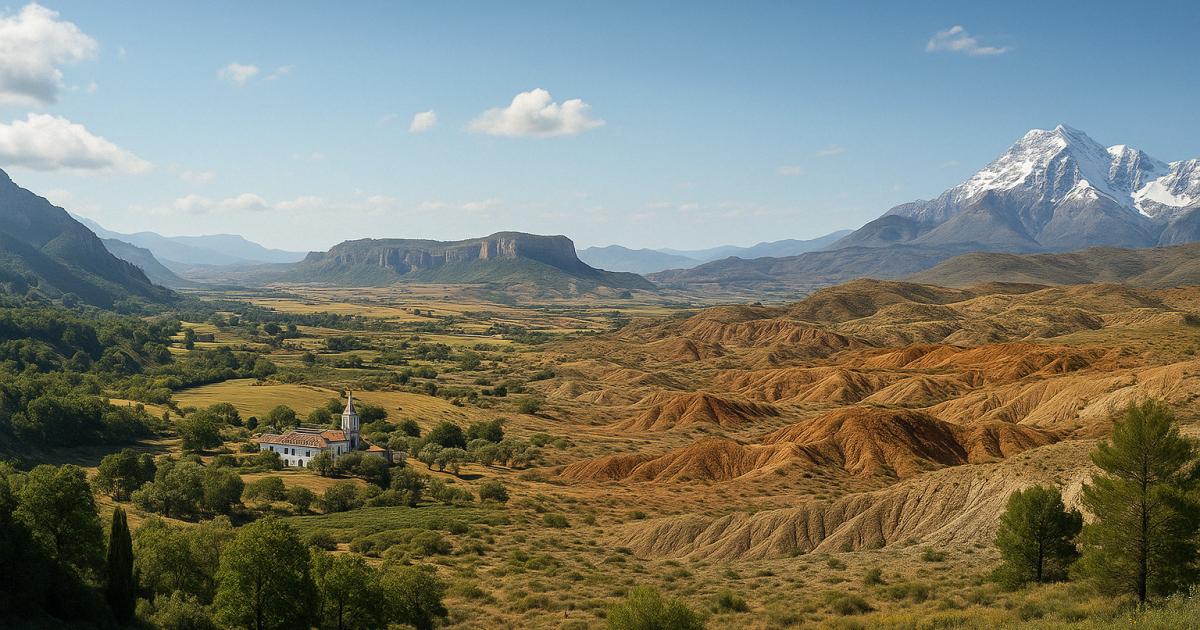
In the Pyrenees, the Sierra Nevada, the Cantabrian Mountains, and the Central Mountain Range, alpine conditions prevail. Temperatures are lower, and precipitation—especially snow—is more frequent. Elevation above sea level and slope exposure are key factors. A single region can have as many as three climate zones! In winter, skiing reigns supreme; in summer, hiking trails and mountain huts take center stage.
5. Semi-arid climate: the hot and dry southeastern region
Southeastern Spain—especially the areas around Almería, Murcia, and the southern parts of Alicante—is one of the driest regions in Europe. Annual precipitation often does not exceed 250 mm. Vegetation is sparse, and the landscape is almost lunar. This is where the “Tabernas Desert” is located, where famous spaghetti westerns were filmed. Although it looks like Arizona, it’s Spain through and through.
6. Subtropical Climate: The Canary Islands – Eternal Spring
Although they are not part of the peninsula, the Canary Islands (especially Tenerife, La Palma, and Gran Canaria) are Spanish territory with a completely different climate. It’s like eternal spring here—average temperatures range between 18 and 25°C year-round. Air currents (trade winds), the terrain, and volcanic soils create local microclimates—ranging from dry coastal areas to humid, green laurel forests in the mountains.
Local Microclimates: Nature Pays Attention to the Details
In addition to large climate zones, Spain and Portugal are full of local anomalies. Examples?
- Jerte Valley (Extremadura) – famous for its unique microclimate, which is ideal for growing sweet cherries and hosting the annual “Cherry Blossom Festival.”
- Granada – In a single day, you can enjoy a cup of coffee on a sunny terrace and, two hours later, go skiing in the Sierra Nevada.
- Rías Baixas in Galicia – a combination of humidity, fog, and oceanic influences creates unique conditions for growing Albariño white grapes.
- Even cities—such as Madrid, Seville, and Lisbon—create their own urban microclimates, with higher temperatures, less air movement, and specific humidity conditions.
The Iberian Peninsula is not just a geographical region—it’s a microcosm full of contrasts, colors, and atmospheres. It’s a place where you can experience four different seasons in the span of a few hours’ travel. This diversity shapes agriculture, culture, tourism, and the residents’ way of life. It’s also a paradise for meteorologists, photographers, travelers, and anyone who simply hates boredom.
Because when it comes to the climate, Iberia is anything but monotonous.