One Spain, Many Systems—Or Why Don't the Same Rules Apply Everywhere?
For many foreigners living in Spain, it may come as a surprise that this country—although formally a unified state—does not operate under a single centralized legal system, as is the case, for example, in Poland.
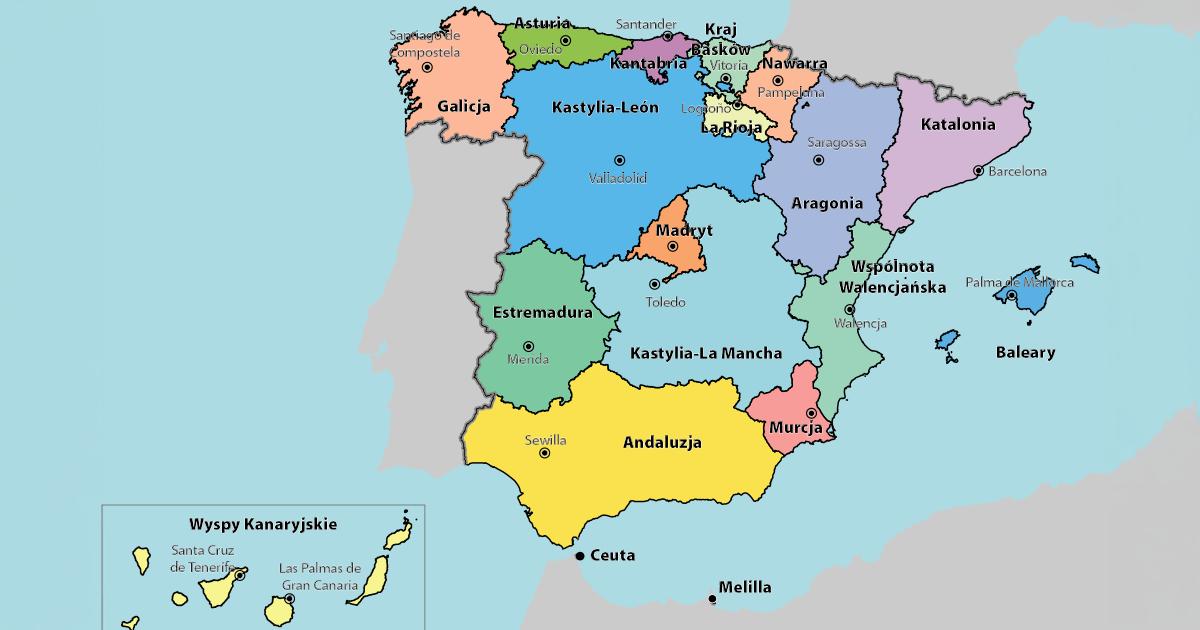
In practice, Spain consists of 17 autonomous communities (comunidades autónomas), which have very broad powers in the areas of law, administration, education, and even... the holiday calendar.
Spain – A Decentralized State
The 1978 Constitution, adopted after the fall of General Franco’s dictatorship, established the model of the “state of autonomies.” This means that each autonomous community has its own regional government, parliament, and legislative powers in many areas. These include, among others, health care, education, culture, land-use planning, and the official language.
In practice, this means that what applies in Madrid does not necessarily apply in Valencia or Catalonia, and vice versa.
Holidays That Aren't Celebrated Everywhere
One of the most visible effects of the autonomous communities’ autonomy is the calendar of public holidays. Indeed, there are national holidays observed throughout Spain, such as January 6 (Epiphany) and October 12 (National Day). However, each autonomous community has the right to establish additional regional holidays, and in addition, individual cities may have their own local holidays (known as patron saint’s days).
That is why, for example, March 19—St. Joseph’s Day—is a holiday in Valencia (due to the Fallas), but not necessarily in Andalusia. On the other hand, June 24—St. John’s Day—is celebrated in Catalonia and Alicante, but not in Madrid.
In addition, public holidays may vary from year to year, depending on the decisions of individual communities. It’s therefore a good idea to check the regional holiday calendar if you’re planning a vacation, running errands at government offices, or visiting your child’s school.
Education, health, taxes… they differ, too
Autonomy also applies to areas such as:
- Education – curricula, the language of instruction (e.g., in Catalonia, most classes are taught in Catalan), and even the start dates of the school year are set by regional authorities.
- Health care – Health care systems are managed by the autonomous communities. A health card issued in Madrid may not be automatically recognized in Andalusia (although in practice it should work, since the systems are interconnected).
- Local taxes – some regions, such as the Basque Country and Navarre, have their own tax systems that are independent of the central government's system.
- Regional languages – In many regions (Catalonia, Galicia, the Basque Country, Valencia), the official languages are not only Spanish (Castilian) but also a regional language.
- Documents, road signs, and education can be provided entirely in the local language.
Be careful with the names of institutions: they aren't always the same agencies
Another aspect that may come as a surprise is the fact that, in different autonomous communities, the same matters are handled… by different government offices, which may have completely different names.
For example: in Valencia, many tax and local government matters can be handled at SUMA Gestión Tributaria, which is responsible, among other things, for property taxes, vehicle taxes, garbage collection fees, and other local taxes and fees. However, in other regions, such an office may not exist in this form—its equivalent might be, for example, the Oficina de Recaudación, the Agencia Tributaria Canaria, the Diputación Provincial, or the Ayuntamiento.
The same is true for agencies dealing with education, social services, or business registration—the names, procedures, and even the recipients of the forms may vary by region.
In practice, this means that:
- Do not automatically assume that procedures from one region work exactly the same way in another;
- It's always a good idea to check for local equivalents of institutions, especially when you move;
- Assistance from local administrators or advisors can make life much easier, especially when dealing with more complicated paperwork.
Spain is made up of 17 worlds: and each has its own rules
Spain, then, is not a country governed by a single set of laws—it is 17 worlds within a single nation, each with its own rules, identities, and traditions. For a resident, this is additional knowledge worth acquiring. For a tourist, it’s a fascinating journey into diversity. For a civil servant… sometimes a source of headaches. But after all—that’s precisely the charm of life on the Iberian Peninsula.