San Juan without fireworks? More and more beaches are saying “no,” but there are places where the tradition is still alive and well
Just a dozen or so years ago, St. John’s Night was associated with the same things almost everywhere in Spain: the beach, a bonfire, friends, music, and the traditional dipping of one’s feet in the sea at midnight. Today, that image is increasingly becoming a thing of the past.
In recent years, many Spanish cities have begun to restrict or completely ban bonfires on beaches. The reasons are similar: safety, environmental protection, problems with litter, and the ever-increasing costs of cleaning up the beaches after one of the most magical nights of the year.
And this is where one of the greatest paradoxes of the Spanish coast comes into play.
San Juan Beach Without San Juan
It would be hard to find a more perverse situation.
After all, Alicante is home to the famous Playa de San Juan—one of the best-known beaches on the Costa Blanca. The name fits perfectly with the festival that celebrates the night of San Juan. Logic would therefore suggest that the largest bonfires should be burning there.
In fact, the opposite is true.
For the second year in a row, the Alicante authorities have banned bonfires on all city beaches during the night of June 23–24. The ban also prohibits bringing wood onto the beach and organizing so-called “botellón” events, which involve mass alcohol consumption on the beach. The city cites safety concerns, the protection of swimming areas, and the need to keep the beaches in good condition for residents and tourists who will be using them the following day as the reasons for the decision.
Interestingly, the Alicante authorities also emphasize that the city’s Hogueras de San Juan tradition is historically linked primarily to the burning of enormous figures and structures set up in the city’s streets, rather than to private bonfires on the beach.
Where did the bans come from?
There is no single nationwide law prohibiting bonfires during San Juan. Decisions are made by individual municipalities.
For many years, most coastal towns tolerated traditional bonfires. However, as the number of event participants grew, new problems arose: nails, glass, and metal objects left behind, burned waste, and damage to sand dunes and protected areas.
After several particularly difficult years, many local governments began gradually tightening regulations. First, they restricted the areas where fires could be lit; later, they introduced controlled zones; and in some cities, they decided to impose complete bans.
Where are campfires prohibited?
Places that currently enforce very restrictive regulations include, among others:
- Alicante,
- many beaches in Barcelona and the surrounding area,
- numerous beaches in Majorca and Ibiza,
- areas under nature conservation, such as the beaches of the Albufera Natural Park near Valencia.
In Valencia itself, it is prohibited to light bonfires on the southern beaches located within the Albufera protected area—including those in the Pinedo, El Saler, and Perellonet areas.
The Costa Blanca, however, has its own rebels
Fortunately for lovers of tradition, bans haven't prevailed everywhere.
Torrevieja remains one of the most welcoming places. Not only does the city allow bonfires, but it has also actively supported the celebration for years. Every year, the city government distributes thousands of kilograms of wood and organizes special security measures for the event.
In 2026, bonfires will be allowed on four beaches:
- La Mata,
- Playa del Cura,
- Los Locos,
- The Castaways.
The city provides the wood, and city officials ensure that participants do not bring in other materials that could leave behind hazardous waste.
Similar solutions are also used in some other towns in the Valencia region and in some coastal cities in Andalusia.
Fire or Water?
Although fire remains the symbol of San Juan, many Spaniards believe that water is the most important element of the festival.
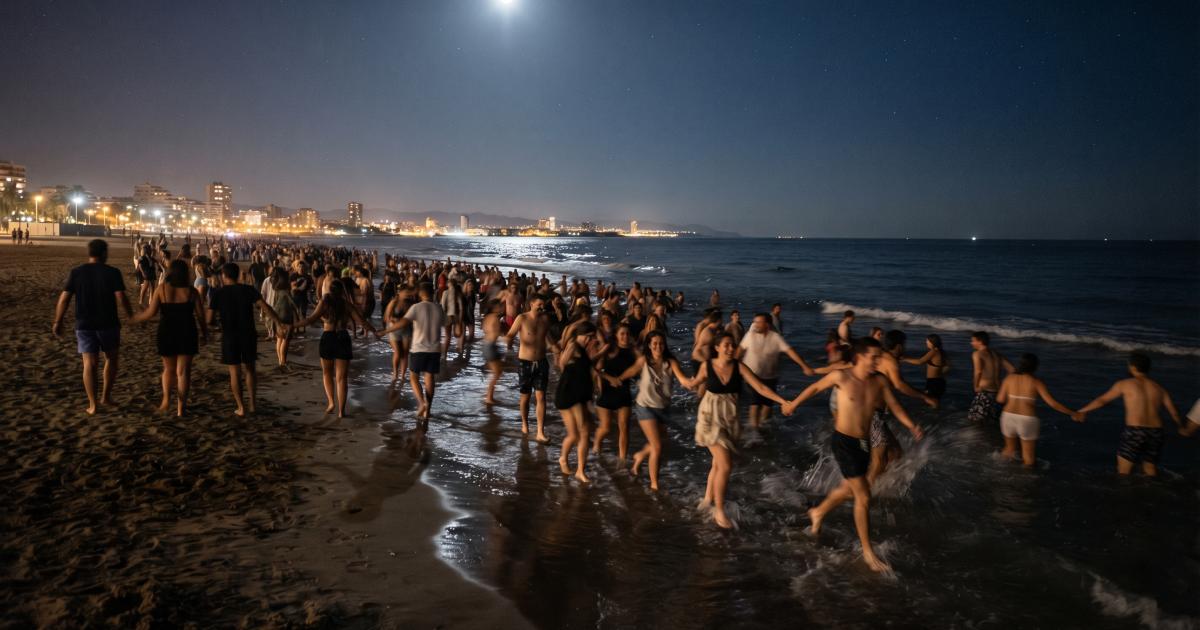
Tradition holds that at midnight, one should enter the sea and let the waves wash over one’s feet. Depending on regional customs, one should take three, seven, or nine steps in the water and make a wish.
That's why, even where bonfires are banned, thousands of people still gather on the beaches. The fire may fade, but the magic of the night remains.
So if, on June 23, you see crowds of people running toward the sea at exactly midnight, don't be surprised. It's not a spontaneous swim.
For centuries, Spain has been trying to ensure a little good luck for the next twelve months.