The Tapas Logic: The more napkins on the floor, the better the food
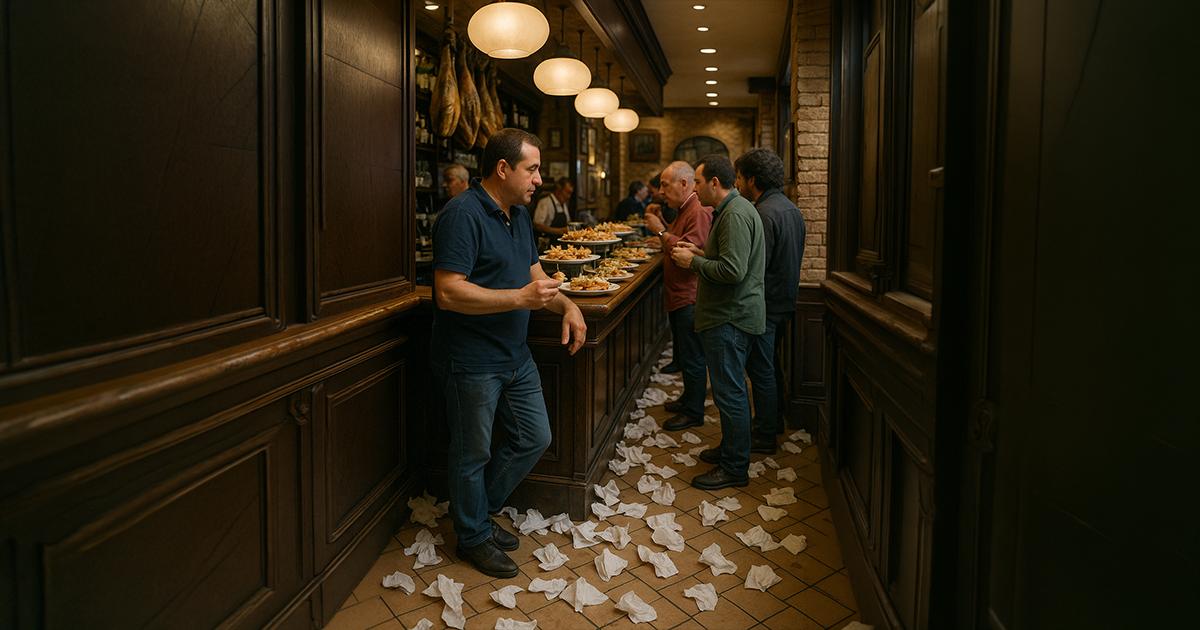
When strolling through the streets of Spain, especially in the evening, you may come across places where the floor looks like the aftermath of a tapas battle—used napkins are literally scattered everywhere, alongside lemon peels, sometimes even olive pits or mussel shells. For an unsuspecting tourist, this might be cause for alarm: “Get out of here—nobody cleans up here!” But for the locals—as well as a growing group of in-the-know travelers—it’s more of a sign that you’ve just hit culinary jackpot.
In tapas bars, especially in northern Spain—in places like San Sebastián, Bilbao, and Vitoria-Gasteiz—there’s an unwritten rule: the more napkins on the floor, the better the place. And while this may sound like a manifesto of gastronomic anarchy, there’s a surprisingly consistent logic behind it.
Tradition or Laziness?
At first glance—a lack of manners, a lack of respect for the staff, and general chaos. But the history of this custom has deeper roots. Back in the day, when tapas bars were bursting at the seams and customers came and went at the tables like actors on a stage, no one had time to gracefully place their napkins on their plates. After eating shrimp, croquettes, or chistorra, people would simply toss the paper onto the floor without a second thought. It was faster, simpler, and—most importantly—it was completely socially acceptable.
Over time, an informal rule emerged: a dirty floor = heavy traffic = good food. The more people leave their mark in the form of napkins, the greater the trust in the chef. Restaurants where the floor is spotless during peak hours raise suspicions—maybe the food isn’t that great, or maybe customers aren’t coming back?
The Napkin Popularity Barometer
This phenomenon isn’t limited to the Basque Country. In Madrid, Seville, Cádiz, and Granada, you can find bars with a similar atmosphere—though the scale may vary. In some places, napkins are only laid out at the bar; in others, they cover almost the entire establishment. Some owners even deliberately take their time sweeping up, knowing that for many guests, it’s precisely this “mess” that serves as the best advertisement. It’s like a Spanish version of Michelin stars—only more… paper-based.
Culture vs. Hygiene
Someone might ask: Is this even hygienic? The answer: absolutely. The Spanish nonchalance toward order doesn’t mean the kitchen operates without sanitary standards. On the contrary—the kitchen facilities must be spotless, the ingredients fresh, and the staff trained. The paper traces of consumption are just part of the scene—after closing, the restaurant is thoroughly cleaned so it can get “dirty” all over again the next day.
Pintxos, Toothpicks, and the Ritual of Trust
In the Basque Country, napkins have another context—a cultural one. In pintxos bars—where pintxos are the Basque version of tapas—you don’t order from a menu; instead, you take your food directly from the bar. The staff counts how many you’ve eaten based on… the number of toothpicks. The customer simply leaves them on a small plate. It’s a unique ritual of trust that, combined with the napkin anarchy, paints a picture of a relaxed place with deeply rooted rules.
Some older bars even have trash cans under the counter—theoretically for napkins—but practically no one uses them. Floor tradition turns out to be stronger than practical logic.
When will you throw your first one?
So if you ever find yourself in a Spanish bar and your feet are getting tangled up in a jungle of paper napkins, don’t panic. It’s not a sign of clutter—it’s a sign of good food and local spirit. The right reaction? Smile, grab your napkin… and toss it on the floor with pride. At that moment, you officially become part of this delicious, if slightly chaotic, tradition.