Torrevieja: the city that was born from the rubble. From a tragic earthquake to a Polish enclave on the Costa Blanca
Most tourists strolling the wide, perpendicular streets of Torrevieja today do not realize that this geometric order is not a coincidence, but the result of one of the greatest tragedies in the history of the Spanish coast. This is a city designed "from the ruler" to survive the worst.
The golden age of salt and contraband
By the time the tragic year of 1829 arrived, Torrevieja was a young, rapidly growing center. Although it had received its municipal rights only 26 years earlier, its port was bustling with activity. Ships from all over the world came here for "white gold" - salt from the local lagoons. Torrevieja at the time, however, was a city of contrasts: next to the elegant houses of the saline administration there was a labyrinth of narrow streets inhabited by fishermen and.... tobacco smugglers, who were a regular part of the local economy.
Saturday that changed everything
Holy Saturday, March 21, 1829, 6:15 p.m. A powerful tremor of nearly 7 on the Richter scale left the city in ruins in seconds. More than 500 houses were destroyed. The church tower collapsed, burying the pastor and his family underneath. The ground cracked, and geysers of muddy water began to erupt from the bottom of the salt lagoons.
Engineer versus chaos: the first anti-seismic city
What happened after the disaster was a rarity on a European scale. King Ferdinand VII sent an outstanding engineer, José Agustín de Larramendi, to the site. He designed Torrevieja from scratch, applying revolutionary principles: wide streets (so that debris wouldn't cover escape routes), low-rise buildings and an interior patio in each house. Interestingly, the authorities used the reconstruction to fight crime - they refused to allocate new housing to people suspected of contraband, hoping they would leave the city.
Saint of earthquakes: San Emigdio
The tragedy of 1829 left a lasting mark not only on the architecture, but also on the spirituality of the locals. It was then that the powerful cult of St. Emidius (San Emigdio), a bishop and martyr considered a patron saint for protection against earthquakes, was born. Although the cult originated in Italy, in Torrevieja it has become a cornerstone of local identity. To this day, on each anniversary of a disaster, a statue of the saint is solemnly taken to the streets in a procession to ensure the city's safety for the following year. For many residents of San Emigdio, he is not just a religious figure, but a symbol of survival and hope that has united the community for nearly two hundred years.
The 1960s and 1980s: From salt to sunshine
- For more than a century, Torrevieja remained a quiet town of saliners and fishermen. The real revolution came in the 1960s with the tourism boom.
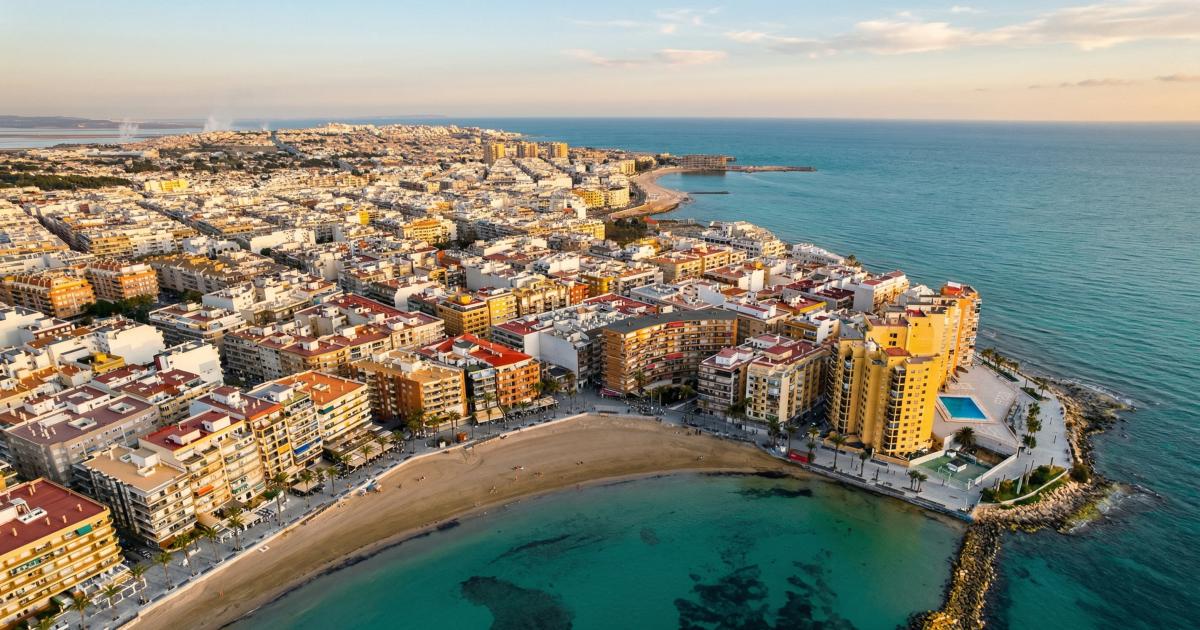
- In the 1980s, the city experienced another leap - it became the "capital" of second homes for foreigners, especially Brits, Germans and Scandinavians. Larramendi's low-rise, single-story buildings began to give way to multi-story apartment buildings, although the historic center still retains the street layout laid out after the earthquake.
New chapter: Poland Torrevieja
Today's Torrevieja is one of the most international cities in Spain, and the latest chapter in its history is being written by... Poles. In recent years, the city has become a real Mecca for our compatriots. Polish speech can be heard here at every turn - from the seaside promenade to the local markets.
Poles not only buy property here en masse, seeking sunshine and a microclimate recognized by the WHO as one of the healthiest in the world, but also actively contribute to the urban fabric. Polish stores, restaurants, real estate offices and service outlets are springing up. For many compatriots, Torrevieja has ceased to be just a vacation destination and has become a second home, where Polish energy blends perfectly with the Spanish mañana lifestyle.
Torrevieja today
Although the city looks modern, one only has to look at the straight streets that intersect at right angles to be reminded of the engineer Larramendi. This is a city that literally rose from the ashes to become the cosmopolitan pearl of the Costa Blanca, where history from 200 years ago meets modern international bustle.