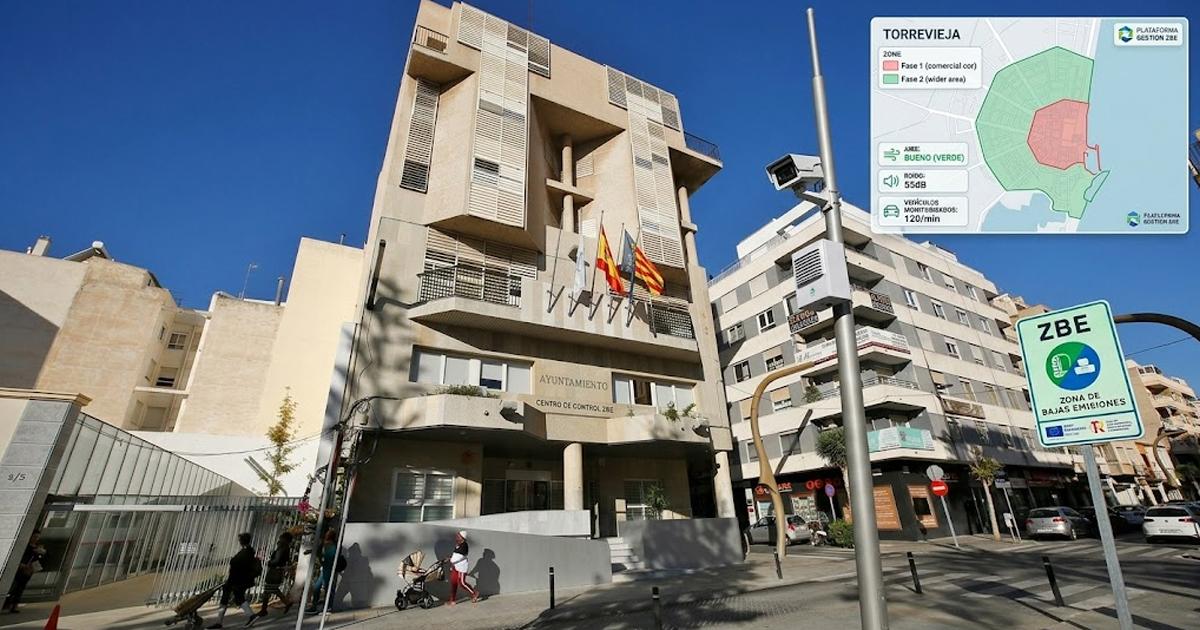
Torrevieja implements Clean Transportation Zone for €1.1 million after years of delays
The EU-funded project is getting off the ground after many postponements and in the face of a legal obligation to implement the changes in cities with more than 50,000 inhabitants.
Torrevieja has been awarded a contract worth 1,189,213 euros to implement a Clean Transportation Zone (ZBE). The project comes after years of delays compared to the deadlines set by national regulations for cities with more than 50,000 residents.
The agreement was concluded with Estacionamientos y Servicios S.A.U. within the framework of the Reconstruction, Transformation and Resilience Plan, funded by European Next Generation funds. The investment aims to transform urban mobility and reduce emissions through an intelligent traffic control and environmental monitoring system.
Regulations vs. delays
The introduction of clean transportation zones is mandatory starting in 2023 for municipalities with more than 50,000 residents under the Climate Change and Energy Transition Law. However, Torrevieja has seen delays in its implementation, as have other centers in the province that are still finalizing their plans for restrictions on pollution-generating traffic.
Infrastructure and technology
The project envisages the implementation of modern technological solutions:
- Registration plate reading cameras to control entry into the zone.
- Environmental sensors capable of measuring pollution levels and noise.
- Integrated technology platform for real-time data management.
- Operational Control Center and a mobile application dedicated to communicating with residents.
Phases of project implementation
The zone will be divided into two stages:
- the First Phase: will include a commercial and urban center with 13 controlled access points.
- Second phase: Will extend the perimeter to the rest of the urban area with another 26 monitored entrances.
Among the streets included in the first phase are: San Pascual, Vistalegre, Paseo de la Libertad, Juan Aparicio, Patricio Zammit, avenida Faleria and calle Orihuela.
Deadlines and system maintenance
The maximum completion time for the first phase was set at 15 weeks, with the contractor offering to reduce this time by four weeks. The contract also includes technical improvements, such as reduced emergency response times and technical training for technical personnel.
The order also guarantees three years of comprehensive system maintenance in the SaaS (Software as a Service) model, which will provide ongoing supervision, specialized technical support and ongoing technological updates.