
RETIRED FROM CONCRETE: San Javier's ruined airport becomes a secret space base and nature's fortress!
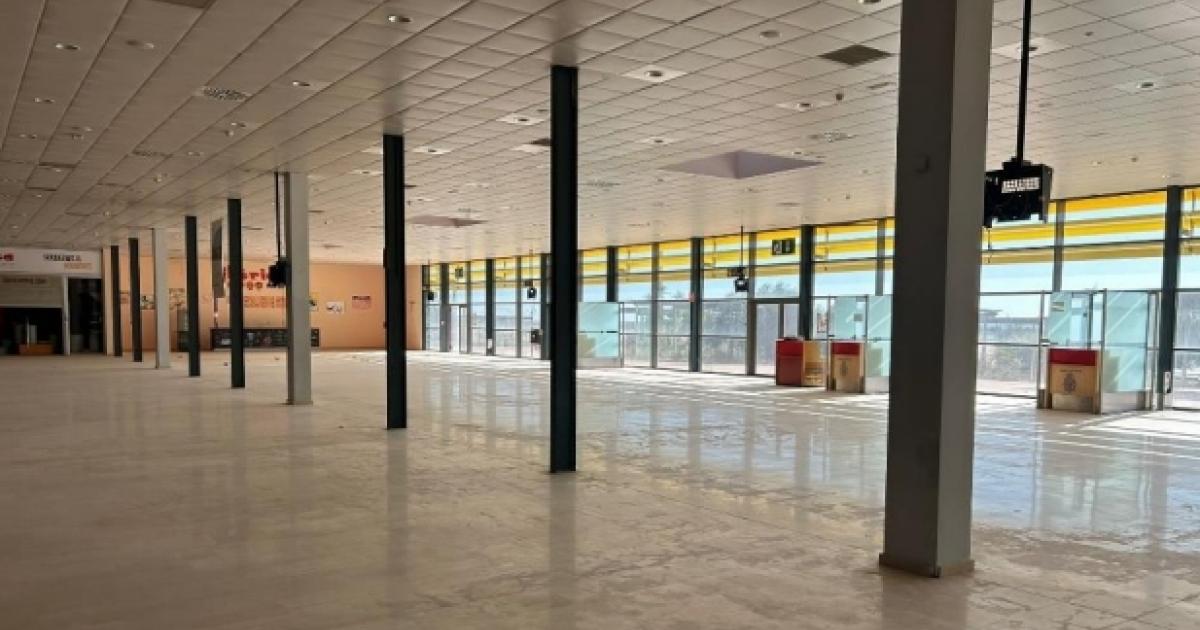
**When the last commercial airliner pulled away from the San Javier runway with a roar of engines at the end of 2018, leaving only echoes and empty halls behind, many wrote off the facility. The transfer of air traffic to a shiny new terminal in Corvera was to be the nail in the coffin for the former hub. It seemed that this massive infrastructure complex would share the fate of many other forgotten megaprojects, slowly being swallowed up by rust, dust and oblivion. However, the truth turned out to be much more fascinating and.... and truly cosmic! The region of Murcia has not yet said its last word. The former San Javier airport is preparing for a spectacular double resurrection, which will shake up the entire country. On the one hand, the terminals will be transformed into an elite space technology hub under the auspices of the European Space Agency (ESA) itself, and on the other, into a gigantic, ultra-modern laboratory to save unique and endangered marine life. A race against time begins, and the stakes are astronomical!
Space revolution in the "Technical Block": Base for tomorrow's technologies
This is not the scenario of the next Hollywood sci-fi blockbuster, it is a reality that is materializing before our eyes in the Region of Murcia. Construction work is in full swing, and heavy equipment is mercilessly transforming outdated structures. The main target of this engineering offensive is the so-called "Bloque técnico" (Technical Block). It is here, on an area of almost 730 square meters, that a strictly specialized hub is being built - an incubator for the most innovative minds, start-ups and technological visionaries.
According to sources from the regional government (Comunidad Autónoma), the work is at an advanced stage and is expected to be completed early in the second half of the year - the grand opening is expected to take place as early as this summer! Who is behind this impressive metamorphosis? The Development Institute (Instituto de Fomento) launched an extremely fierce bidding process, which was eventually won by local construction powerhouse San Javier Infraestructuras y Ferrocarriles S.L.
Key facts and figures about the emerging Hub:
- Contract value: More than 689,000 euros (almost 700,000 euros with taxes), proving that no one here saves on innovation.
- European support: The investment is co-financed as much as 60% by the European Regional Development Fund (Feder). This proves that Europe is looking at San Javier with great hopes.
- Express pace: The completion time is just six months. The builders are literally racing the calendar to make it in time for the summer heat.
- Total area: In addition to the building itself, the project includes a giant metamorphosis of the 4080-square-meter plot, including green relaxation zones, modern water tanks and new lighting systems.
However, it's what will be happening inside that will spice things up. The Hub will be the heart of the Caetra Program - a pioneering project by the Murcia government, shrouded in an aura of mystery, which aims to develop so-called dual technologies. What does this mean in practice? We're talking about applications based on advanced satellite data that can be used both in the civilian sector and in the broader defense, security and reconstruction sectors. This is where elite engineers and developers will be trained in specialized courses, and start-ups and spin-offs from top universities will be able to test their breakthroughs.
The facility will be a true fortress of innovation. It has been designed with six flexible, electronics-soaked modules for businesses, two multifunctional training rooms that meet the rigorous standards of the Regional Employment Office (SEF), access control zones, top-of-the-line video surveillance systems, complex sensor networks and integrated alarm systems linked to the security headquarters of the entire area.
Enter the dragon: the European Space Agency (ESA) chooses San Javier!
As if that wasn't enough, the Region of Murcia has received news that has electrified all of Spain. The region's president, Fernando López Miras, announced with undisguised triumph: "We made it! The former San Javier airport has been officially chosen as one of the Spanish headquarters of ESA BIC (Business Incubation Center), a powerful network of sub-incubators of the European Space Agency, an organization of 19 member states.
This is no ordinary support program. It's a pass to the absolute technological premier league. San Javier joins a small, elite group of centers that are deciding the future of space conquest and the implementation of space technologies in our daily lives. These technologies are set to revolutionize precision agriculture, global logistics, energy production or, ultimately, national security.
**What does ESA's presence in Murcia mean?
- Incubating the giants of tomorrow: Between 2026 and 2030, the new center will take under its wing up to 12 selected outstanding business projects.
- Money rain: The project will receive a massive cash injection. The European Space Agency alone will put 504,000 euros on the table, and the local Info Institute will contribute another 360,000 euros.
- Direct Support: Each qualified start-up can count on non-refundable funding of up to €30,000, as well as something much more valuable: direct mentoring from ESA experts, access to technologies unavailable to mere mortals, and entry into a European network of investors with unlimited portfolios.
This is an absolute breakthrough that forever changes the positioning of Murcia on the map of Europe. From a region mainly associated with tourism and agriculture, it is becoming a strategic territory for the space sector.
Ocean Rescue Base: Mar Menor Observatory (OM2)
While one wing of the airport looks to the stars, the other focuses its attention on what lies beneath the water's surface. Faced with a growing environmental threat, the former terminals will become home to the Mar Menor Species Recovery and Conservation Center (OM2), also called the Mar Menor Observatory. It's a collision of two worlds - high space technology and the struggle for the survival of a unique biosphere.
The project, although still in its early stages, has a momentum that is impressive. At the end of June, the authority issued a tender for the creation of massive documentation (from conceptual to basic to detailed design). That tender, worth €267,000, was won earlier this year by renowned Cartagena architect José Manuel Chacón Bulnes. He has just eight months to outline the vision for the giant hospital and research center for marine and terrestrial fauna.
The Mar Menor Observatory in numbers:
- Giant space: The project will cover a currently unused area of as much as 4515 square meters!
- Powerful reservoirs: There will be 16 huge pools and water reservoirs with a total capacity of 854 cubic meters of water. These are real water fortresses.
- Strategic breakdown: Nine of the sixteen tanks will be dedicated exclusively to the rescue and study of endemic species from the Mar Menor - an ecosystem as globally unique as it is frighteningly fragile. Three zones will be dedicated to the biodiversity of the region's Mediterranean coastline, and four more will be used to monitor other marine species.
- Budget at a premium: The regional government has already set aside an astronomical sum of nearly 2 million euros in its 2025 budget for the project.
This will be no ordinary fish museum. As announced by the Mar Menor Ministry, the complex will be equipped with sterile laboratories, advanced technical areas for veterinarians, intensive care units for endangered species, and unique outdoor "semi-freedom" areas. It is there that patients from the animal world will undergo convalescence, preparing to return to their natural environment. Importantly, all this impressive research and rescue machinery has been planned so as not to interfere in the slightest with the activities of the neighboring General Air Academy (Academia General del Aire).
The two faces of the new Murcia
The astonishing transformation of San Javier's former civil airport is more than just an infrastructure project. It's a resounding manifesto and proof that even from the ashes of past ventures, something absolutely groundbreaking can be built. The Spanish sun will now illuminate not only satisfied tourists, but also engineers coding software for military satellites and marine biologists fighting to save extraordinary sea creatures.
From rockets and satellites to seahorses and endangered turtles, San Javier is currently writing an amazing new chapter in its history. The race to see who will be the first to conquer this technological and ecological Eldorado has already begun! Great things will once again take off from the former runway - but this time, their destination will not be other cities, but the future of our planet and space.