A “Super El Niño” is on its way. Scientists warn: Europe must use this time to prepare
A strong El Niño event developing in the Pacific Ocean could affect global temperatures, agriculture, and food security. The U.S. agency NOAA warns that it will remain strong well into early 2027. During a meeting at the European Parliament, scientists called for urgent action. What does this mean for Spain, Poland, and Poles living on the Costa Blanca?
Alarming Forecasts from the Pacific Ocean
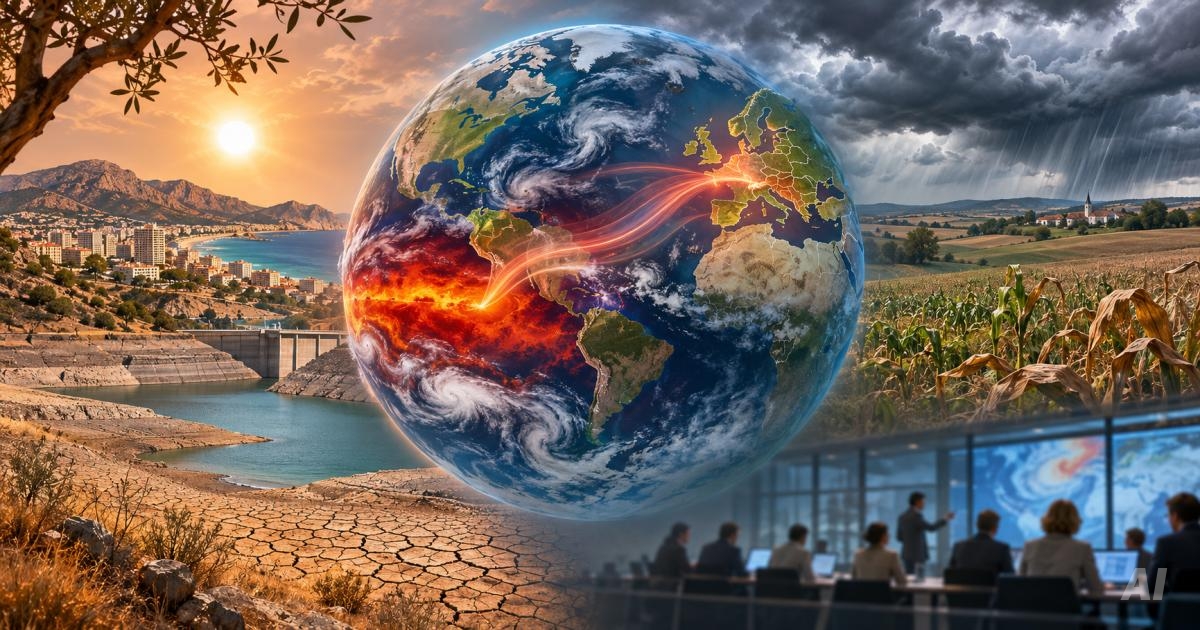
El Niño has once again become the focus of climatologists' attention. Surface water temperatures in the equatorial Pacific are reaching exceptionally high levels, and the latest models suggest the possibility of one of the strongest episodes in the history of modern measurements.
In a statement released on November 12, 2026, the U.S. National Oceanic and Atmospheric Administration (NOAA) reported that this process continues to intensify. The probability of a strong or very strong El Niño persisting from January through March 2027 exceeds 79 percent. The sea surface temperature index in the monitored Niño 3.4 region has already reached .5^\circ\text{C}$ above normal, and in some parts of the eastern Pacific, anomalies have exceeded ^\circ\text{C}$.
NOAA also estimates there is about a 60 percent chance that the current cycle will reach historic intensity, breaking records dating back to when measurements began in 1950. It is worth noting, however, that these are probabilistic forecasts, not a certainty that a specific scenario will occur—even the strongest El Niño does not allow for accurate advance prediction of the weather in every country.
What exactly is El Niño?
El Niño is a natural climate anomaly associated with periodic warming of the surface waters in the central and eastern parts of the equatorial Pacific Ocean. Changes in ocean temperature affect global atmospheric circulation and, as a result, alter the distribution of precipitation and temperatures in various parts of the world.
In some regions of the world, this results in prolonged droughts, while in others it increases the risk of torrential downpours and flooding. This impact is not uniform and depends on the season and local conditions. The terms “Super El Niño” and “Godzilla El Niño,” although frequently used in the media to describe exceptionally intense episodes, are not official categories of weather warnings.
Seven months to prepare. Alarm bells ringing in the European Parliament
On November 10, 2026, a presentation of the international campaign “Alerta El Niño” took place at the European Parliament in Brussels. The participants called on European institutions to accelerate preparatory work in light of the possible consequences of the developing anomaly.
One of the strongest warnings came from Dr. Antonio Turiel, a researcher at the Institute of Marine Sciences in Barcelona, which is part of Spain’s National Research Council (CSIC).
“We have seven months before the most catastrophic effects of this El Niño set in,” the scientist warned in a conversation with reporters.
His statement was a call to make wise use of this window of opportunity, rather than a precise prediction of the dates of specific disasters. Experts highlighted, above all, the threats to agriculture, water availability, infrastructure, and food security, particularly in countries already grappling with economic and climate-related challenges.
Spain: Water, Heat, and Memories of the Floods in Valencia
For Poles living in Spain, news from the Pacific has special significance. The Iberian Peninsula is one of the regions in Europe where water availability and prolonged heat waves have a direct impact on agriculture, tourism, and daily life. The southern and eastern regions of the country are particularly vulnerable—the Valencian Community, Murcia, and Andalusia have been grappling for years with a lack of rainfall and the need to manage water resources carefully.
Residents of the Valencia region also have fresh memories of the tragic flood disaster of October 2024, when torrential rains and rising river levels caused massive destruction and the deaths of hundreds of people. Those events demonstrated the critical importance of effective early-warning systems, flood-protection infrastructure, and the readiness of emergency services.
The current El Niño does not automatically mean a repeat of that tragedy in Valencia or on the Costa Blanca—the Pacific’s influence on the weather in Southern Europe is too complex to make such definitive predictions. However, the broader context of rising temperatures remains a cause for concern. For residents of Alicante, Torrevieja, Orihuela Costa, and other coastal towns, this means, above all, the need to closely monitor weather reports and the hydrological situation.
What about Poland? Climate change doesn't stop at borders
Although Poland is located in a different climate zone than Spain, it should also closely monitor developments. The impact of El Niño on Central Europe is harder to predict than in the tropics and does not provide a basis for concluding that a specific drought, heat wave, or cold winter will occur.
However, this does not mean there will be no consequences for the Polish economy. Weather conditions affecting agriculture and water management will be crucial—both prolonged periods of low rainfall and torrential rains can cause crop losses. Additionally, if a strong El Niño were to impact harvests in the world’s most important agricultural regions, it would affect the global supply of raw materials and food prices, including those on European store shelves. Poland and Spain therefore have a shared interest in strengthening food security and adapting their infrastructure.
A Threat to Millions of People: A Warning from the World Food Program
The most severe effects of El Niño threaten countries where millions of people rely on rain-fed agriculture for their livelihoods. The United Nations World Food Program (WFP) estimates that by the end of 2027, the current anomaly could increase the number of people affected by acute food insecurity by at least 49 million (this refers to people at risk of serious problems accessing food, not a forecast of the number of deaths from starvation).
Certain countries in East and Southern Africa, Central America, and the Asia-Pacific region remain the most vulnerable. Droughts, floods, and crop failures there can cause prices of basic commodities to skyrocket, exacerbating humanitarian crises in countries already affected by conflict and poverty.
The European Union is providing 13.5 million euros in aid
Europe is not merely an observer. As early as November 6, 2026, the European Commission announced the allocation of 13.5 million euros in humanitarian aid to help communities in East and Southern Africa prepare for the impending effects of El Niño. The funds were allocated as follows:
- 6 million euros for Somalia,
- 1 million euros for Kenya,
- 1 million euros for Uganda,
- 5.5 million euros for activities in South Africa and the Indian Ocean region.
These funds will finance, among other things, the preparation of evacuation sites, direct financial support for the poorest, and healthcare. As the Commission emphasizes, early prevention can significantly reduce the scale of future crises—this is also an important message for the EU member states themselves.
What Should European Countries Do?
The organizer of the Brussels meeting, MEP Vicent Marzà, once again cited the example of the 2024 floods in Valencia, criticizing the slow pace of work on EU regulations regarding climate resilience.
“A lack of adaptation and a lack of preventive measures cost lives,” the politician emphasized.
Participants in the debate identified a list of priorities that national and local governments should implement immediately:
- modernization of early warning systems for floods and heat waves,
- expansion of flood control infrastructure,
- investments in small-scale water retention and water retention in the landscape,
- better protection of agricultural land against the effects of drought,
- limiting development in areas particularly vulnerable to flooding,
- Creating publicly accessible cooling zones in cities to protect people from extreme temperatures.
Two Countries, One Challenge
For Poles living in Spain, the topic of El Niño has a dual dimension—it concerns both everyday safety on the Iberian Peninsula and the economic situation in Poland, where our loved ones live. The situation in the Pacific serves as a reminder that, in a globalized world, climate challenges quickly cross national and continental borders.
This is not about causing panic or predicting disasters that cannot be confirmed today, but about drawing conclusions. In the face of increasingly severe weather anomalies, both Spain and Poland are faced with the same challenge: they must invest in infrastructure and manage water resources in a way that allows them to stay ahead of crises, rather than merely reacting to their consequences.